
Not all hair loss is the same, so not all treatments work the same. The cause of your shedding decides which approach is appropriate, and some causes need a medical work-up before any scalp treatment makes sense.
This guide explains why hair falls out, ranks the main treatment options by how strong their evidence is, and is honest about which ones are well-proven and which are still emerging.
Why hair falls out: the causes that matter
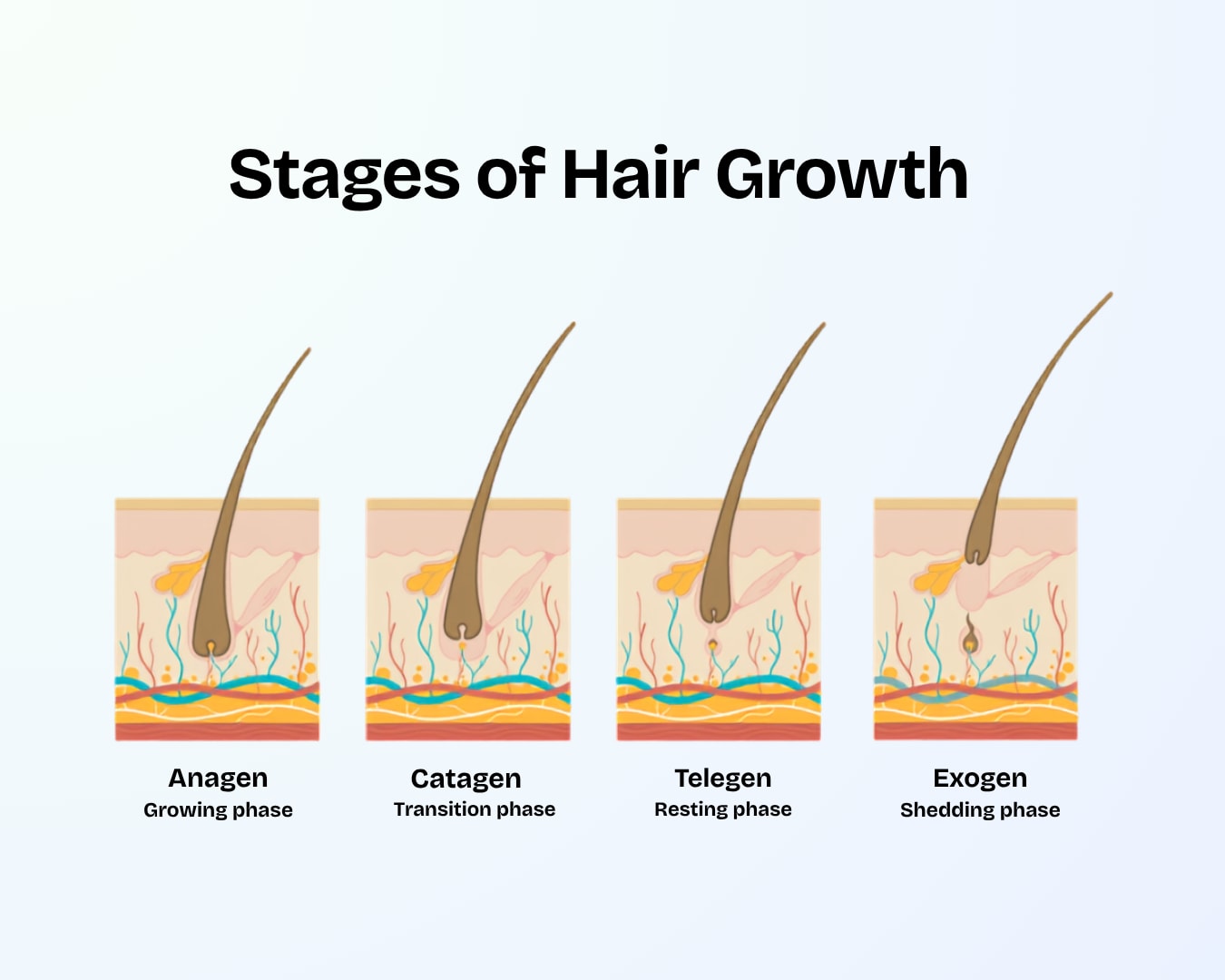
Hair grows in a cycle: an active growth phase (anagen) and a resting and shedding phase (telogen). Different problems disrupt this cycle in different ways. Some common ones:
Androgenetic alopecia
Pattern hair lossThe most common cause. In genetically susceptible people, a hormone called DHT gradually shrinks the follicles, a process known as follicular miniaturisation, until they produce only fine hair or none at all.
Telogen effluvium
Diffuse sheddingFollows a trigger such as illness, surgery, rapid weight loss, childbirth, or a nutritional deficiency. It usually starts two to four months after the trigger and is often self-limiting once the cause is resolved.
Other causes
Needs assessmentAlopecia areata (an autoimmune condition), scalp disease such as fungal infection, and systemic issues like thyroid problems or iron deficiency. Some will not respond to scalp treatments at all because the real problem is elsewhere.
Having the right diagnosis matters — the same shedding can have very different causes, and treating the wrong one wastes time.
Scalp and clinic treatments, ranked by evidence
Being honest about evidence is more useful than listing everything as equally effective, so here is roughly where each option stands.
Strong evidence
Topical minoxidil (2% or 5%)
The most-studied option and available over the counter. It prolongs the growth phase and slows shedding, and research suggests it helps roughly two in three people with pattern hair loss. It does not fix a receding hairline, and shedding resumes if you stop.
Finasteride (oral)
Reduces DHT and is well-supported for male pattern hair loss. It requires a prescription and is not suitable for women who are or may become pregnant.
Good, but prescription-led
Oral low-dose minoxidil and dutasteride
Used by doctors off-label, with growing clinical support and results. Both require a prescription and medical monitoring.
Moderate evidence
PRP (platelet-rich plasma)
Injects a concentrate of your own platelets into the scalp to release growth factors. Several trials show positive results for pattern hair loss, though large scale good studies are limited, there is no standardisation, and results vary significantly.
Microneedling / RF microneedling
Creates micro-channels that improve absorption of topical treatments and prompt a local healing response. Radiofrequency can also improve microcirculation. It is generally reliable with consistent results. The evidence is strongest when it is used alongside minoxidil rather than on its own.
Emerging evidence
Exosomes and growth-factor scalp treatments
Deliver regenerative signalling molecules to the follicles, usually via microneedling or RF microneedling. The mechanism is plausible and the safety profile is generally good, but the clinical research is still early, without large randomised trials yet. With the right product and combined with microneedling, the results have been very promising.
Low-level laser therapy (LLLT)
Uses light to try to stimulate follicles. The evidence is mixed, and results tend to be modest.
Depends on the cause
Nutritional supplements
Biotin and saw palmetto can help improve hair growth, however, they need to be taken for an extended duration and may not work. Being a food supplement, it is also not regulated as a medication, hence obtaining reputable brands from licensed clinics is important to ensure authenticity. Other specific vitamin or mineral supplements may also only be beneficial if you actually have a deficiency.
Hair transplant
Surgically moves DHT-resistant follicles and is a strong option for established, stable pattern loss, though it is a surgical procedure aimed at hairline restoration, rather than improving the actual regeneration of the hair follicles.
What the Singapore context means
A practical point for local readers: some of the most effective options, including oral minoxidil, finasteride, and dutasteride, require a prescription from a licensed doctor in Singapore. A consultation is also the right starting point for in-clinic procedures like exosome-based scalp treatments. More importantly, the consultation is where the cause is identified, sometimes with blood tests, so the treatment actually targets the right problem.
A doctor-supervised scalp treatment at Reborn
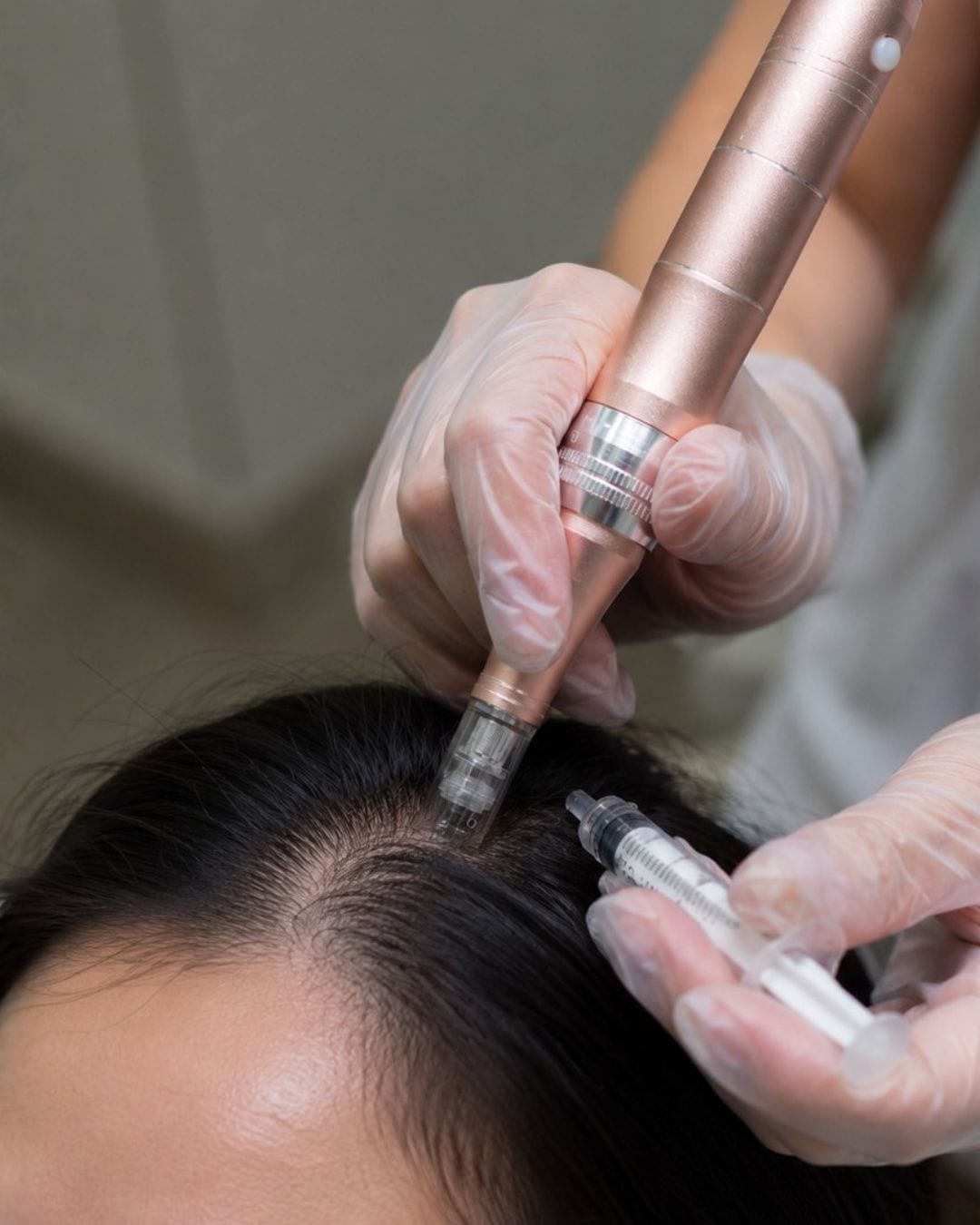
For shedding linked to weakened or dormant follicles, Reborn offers FolliCell Strong Anti-Hairloss, a doctor-supervised scalp treatment that combines microneedling with exosome-rich growth-factor serums delivered to the follicle layer. The doctor selects the formulation based on your scalp and may recommend a clinic-dispensed topical to help regulate DHT activity as part of a longer-term plan. It is designed to support scalp health, follicle resilience, and hair texture in people with gradual thinning. Whether it suits you, and what to realistically expect, is determined at consultation, and results vary between individuals. If hair loss is on your mind, you can request a consultation to find out what is driving it.
When should you see a doctor about hair loss?
Sooner rather than later if you notice rapid or heavy shedding, patchy loss, changes to the scalp itself, or shedding that started after an illness, a major life event, or a new medication. Trying random over-the-counter products without knowing the cause can delay the treatment that would actually help.
Frequently asked questions
What is the most evidence-backed scalp treatment for hair loss?
Topical minoxidil has the longest track record and strongest evidence for pattern hair loss, and prescription finasteride adds support for men under a doctor's care. In-clinic options like PRP and microneedling have moderate evidence, and exosome-based treatments are an emerging category. The most appropriate option depends on your cause, which a doctor assesses.
Does minoxidil work for everyone?
Research suggests it helps roughly two in three people with pattern hair loss. It does not address the underlying cause and needs to be continued to maintain results. It may not help other types of hair loss, which is why identifying the cause first matters.
Do I need a prescription for hair loss treatment in Singapore?
Some of the most effective options, including oral minoxidil, finasteride, and dutasteride, require a prescription from a licensed doctor. A consultation is also the right starting point for in-clinic procedures.
Can stress cause hair loss, and will it grow back?
Yes. Telogen effluvium is diffuse shedding triggered by physical or emotional stress, illness, or nutritional deficiency. It usually starts two to four months after the trigger and is often self-limiting once the cause is resolved, though prolonged or severe shedding warrants a doctor's assessment.
What is an exosome scalp treatment, and is it proven?
Exosomes are cell-derived vesicles carrying regenerative signalling molecules, often delivered to the scalp via microneedling to support follicle activity. The research is still emerging, without large randomised trials yet, though early data and safety profiles are generally favourable. Suitability and realistic expectations should be discussed with a doctor.