
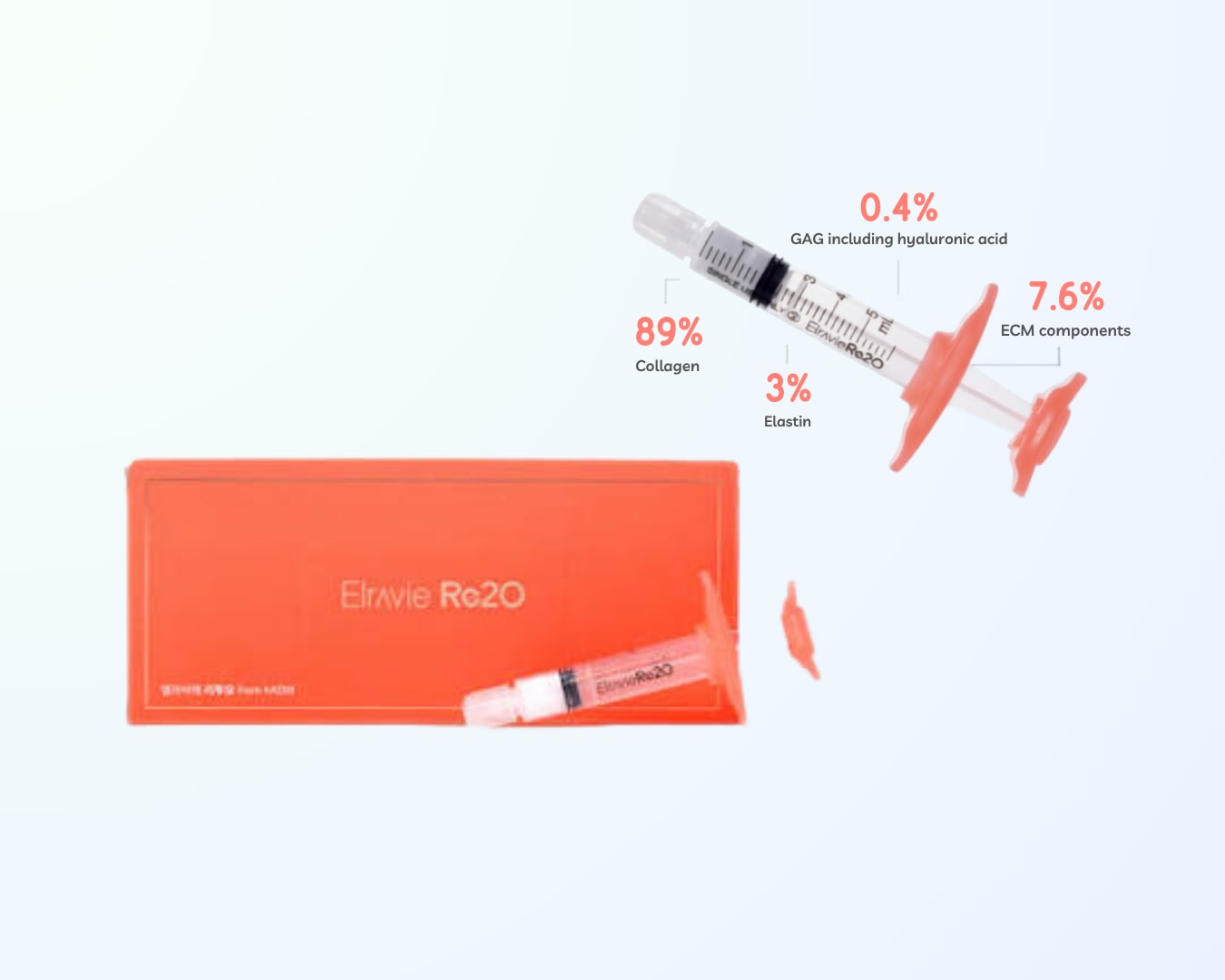
RE20 is an injectable skin booster, originally from South Korea, made from human acellular dermal matrix (hADM). That is a processed form of dermal tissue that supplies the skin with its own structural proteins, mainly collagen and elastin.
Most boosters either hydrate the skin or signal it to make more collagen. RE20 takes a different route and delivers the building blocks of the dermis directly. This guide explains what RE20 is, how it works, what a treatment involves, and how it sits alongside other skin injectables like Rejuran and Prof5ilo.
What does "ECM" actually mean?
ECM stands for extracellular matrix. It is the scaffolding that sits between your skin cells in the dermis: a mesh of collagen, elastin, and other proteins, plus water-binding molecules called glycosaminoglycans (which include hyaluronic acid). This matrix is what gives young skin its firmness, bounce, and smooth surface.
As skin ages, the matrix thins and frays. Collagen production slows and elastin degrades, so the scaffolding loses density. In Singapore, that process tends to be accelerated by year-round UV exposure and humidity, both of which place sustained stress on the dermis. The visible results are familiar: looser texture, finer lines, larger-looking pores, and a general loss of "spring" in the skin. A poorer dermal environment also contributes towards inflammation and sensitivity.
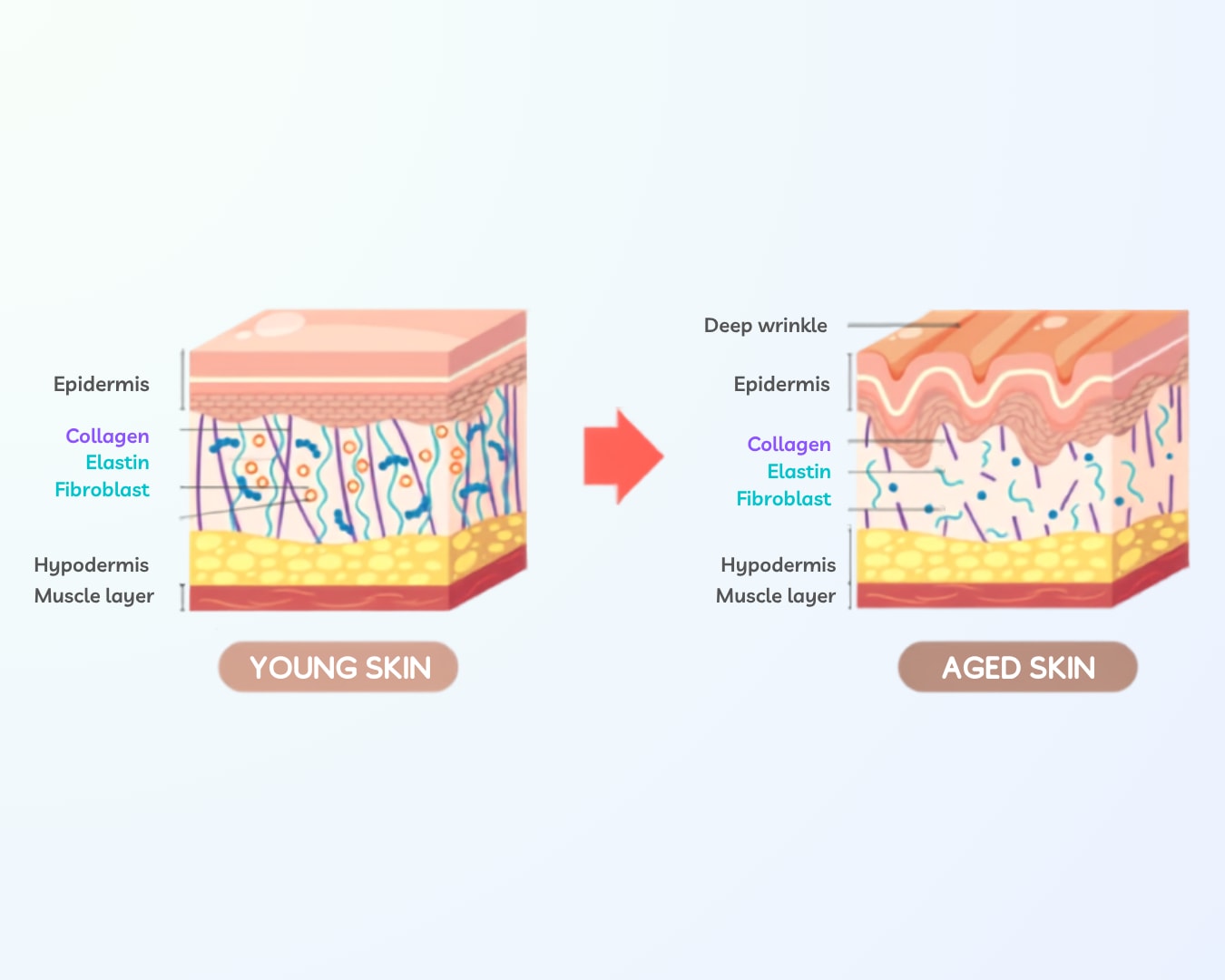
RE20 is designed to address that matrix directly.
How is RE20 different from other skin boosters?
It helps to think of skin boosters in three broad approaches:
Hydration
Classic hyaluronic acid boosters draw water into the skin for a plumper, glassier look.
Stimulation
Products like Rejuran use polynucleotides (PDRN) to signal your own cells to repair and produce more collagen over time.
Structural replacement
RE20 supplies processed dermal matrix particles directly into the skin, giving fibroblasts (your collagen-making cells) a ready-made scaffold to attach to and build around.
That third approach is what makes RE20 distinct. Rather than only adding water or only sending a repair signal, it aims to restore the matrix material itself.
What is inside RE20?
The matrix is rich in the structural proteins skin naturally uses. Manufacturer composition figures are roughly:
| Component | Approximate share |
|---|---|
| Collagen (types I and III) | ~89% |
| Other ECM proteins | ~7.6% |
| Elastin | ~3% |
| Glycosaminoglycans (incl. hyaluronic acid) | ~0.4% |
During processing, the donor cells are removed so that only the structural framework remains. This decellularisation minimises the risk of an immune reaction while keeping the useful proteins intact.
How does RE20 work in the skin?
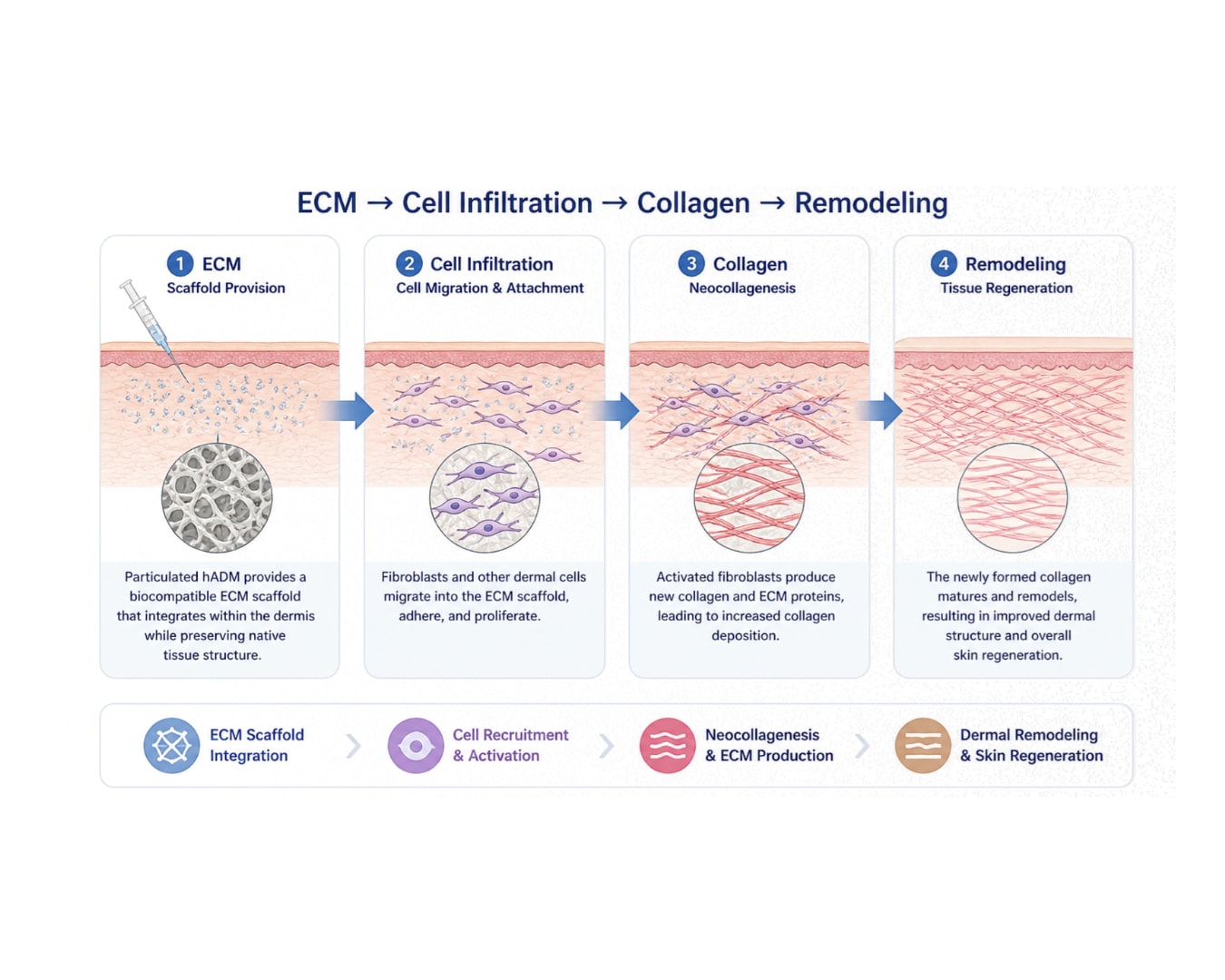
Once injected into the mid-dermis, the micronised matrix particles act as a scaffold. Resident fibroblasts migrate along and attach to this framework, and over the following weeks they lay down fresh collagen and elastin of their own. So there are really two phases. First, an immediate structural contribution from the injected matrix. Then a slower, cell-driven rebuilding that develops over two to three months.
This is the main point of difference from its better-known cousins. Rejuran sends a repair signal, while RE20 supplies the structure. One is an instruction, the other is the material. Prof5ilo and other skin boosters hydrate using a high concentration of hyaluronic acid, whereas RE20 focuses on the matrix proteins rather than water-binding alone. None of these is automatically the right answer. They simply do different things.
What skin concerns might RE20 be suitable for?
- Early to moderate loss of skin firmness or elasticity
- Rough or uneven skin texture
- Enlarged-looking pores
- Acne scars
- Fine lines and a general loss of skin "density"
- Rosacea and various hypersensitivity conditions
- A plateau after previous hydrating or PDRN-based boosters
Suitability is individual. The same concern can have different underlying causes, so a doctor assesses your skin, medical history, and goals before suggesting any injectable. RE20 is not a filler, not a fat-dissolving treatment, and not a laser, so it will not add volume or resurface the skin the way those do.
What does an RE20 treatment involve?
- How many sessions?
- Most protocols begin with three sessions spaced about four weeks apart, followed by maintenance roughly every six to twelve months. The exact plan depends on your skin and is decided at consultation.
- How long does it take?
- A session generally runs around 30 to 45 minutes, including time for numbing.
- What is the downtime?
- Generally minimal. Mild redness, swelling, or occasional bruising at the injection points typically settles within 24 to 48 hours, and most people return to daily activities the same day. As with any injectable, less common risks exist and are discussed during consultation.
- When do results appear?
- Some texture improvement may be noticed within the first week, with the fuller, collagen-driven changes developing over roughly two to three months.
RE20, Rejuran, and Prof5ilo at a glance
| RE20 | Rejuran | Prof5ilo | |
|---|---|---|---|
| Active | Human acellular dermal matrix | Polynucleotides (PDRN) | High-concentration hyaluronic acid |
| Core idea | Supplies structural matrix | Signals cellular repair | Bio-remodels and hydrates |
| Often considered for | Elasticity, texture, pores | Repair, texture, sensitive skin | Laxity, hydration, dullness |
| Typical initial course | 2 to 3 sessions | 3 to 4 sessions | 2 sessions |
The right choice depends on your skin's individual condition, which is why this is best worked out with a licensed doctor rather than from a table alone. For a fuller side-by-side, see our guide on Rejuran, Re2O and Prof5ilo, or read about the Re² Double Collagen Booster at Reborn.
Frequently asked questions about RE20
What is RE20 skin booster made of?
RE20 is derived from human acellular dermal matrix (hADM), which is processed dermal tissue that retains structural proteins such as collagen, elastin, and glycosaminoglycans, with the donor cells removed during processing.
How is RE20 different from Rejuran?
Rejuran contains polynucleotides (PDRN) that signal your skin cells to repair and produce collagen over time. RE20 instead delivers structural matrix proteins into the dermis as a scaffold. They work through different mechanisms, and also pair well together for a synergistic effect.
How many RE20 sessions will I need?
Many treatment plans start with three sessions about four weeks apart, then maintenance every six to twelve months. The number depends on your individual skin condition and is discussed at consultation.
Is there downtime after RE20?
Downtime is generally minimal. Mild redness, swelling, or occasional bruising at the injection sites usually settles within 24 to 48 hours, and most people resume normal activities the same day.
Is RE20 suitable for everyone?
Most, though not everyone, will be suitable. RE20 may be considered for adults with reduced firmness, rough texture, or enlarged-looking pores, but our doctor will review your medical history, skin condition, and goals before recommending any treatment.